Resources·Exhibitions
The Modern Exhibitor's Playbook: why success goes beyond the exhibition booth
By ExpoLead OS | 5 min read | Published on Jul 2026
For many years, exhibiting at trade shows followed a familiar formula. Companies invested heavily in booth design, promotional materials, and giveaways, hoping to attract as many visitors as possible and generate new business.
Today, that approach is no longer enough.
Successful exhibitors no longer measure an exhibition by the number of people who stop at their stand. Instead, they focus on building meaningful conversations, identifying qualified opportunities, and creating a structured follow-up process that delivers measurable business results.
In this guide, we'll explore:
- Why the traditional exhibiting approach no longer delivers the best return on investment
- How the mindset of successful exhibitors has changed
- The growing role of AI and data in exhibition planning
- Why your exhibition stand should become a meeting hub, not simply a place to collect visitors
Modern exhibitions are becoming increasingly data-driven, and businesses that adapt to this shift are far more likely to maximise their investment.
Why the traditional exhibition strategy falls short
For decades, success at an exhibition was often judged by one simple metric: foot traffic.
Companies competed to build the biggest booth, create the most eye-catching displays, and attract as many visitors as possible. The assumption was straightforward. The more visitors you attracted, the more sales opportunities you would generate.
In reality, that wasn't always the case.
A crowded stand doesn't necessarily produce qualified prospects. Many conversations never progress beyond the exhibition floor, making it difficult to justify the significant investment in booth construction, travel, accommodation, promotional materials, and staff.
This is one of the biggest weaknesses of the traditional exhibition model. It measures activity rather than outcomes.
Without a structured process to identify, qualify, and follow up with the right visitors, exhibitors often relied more on luck than strategy.
Today, companies are looking beyond visitor numbers and focusing on measurable return on investment.
The exhibitor mindset has changed
Modern exhibitors understand that success isn't about collecting the highest number of business cards or scanning the most visitor badges.
It's about identifying the right people.
Rather than treating every visitor equally, exhibitors now focus on building relationships with prospects who genuinely match their products, services, and business objectives.
Having access to attendee information before meetings has become increasingly valuable. Understanding a visitor's industry, areas of interest, company profile, and business needs allows exhibitors to prepare meaningful conversations instead of generic sales pitches.
This shift enables sales teams to personalise every interaction, increasing the likelihood of creating genuine business opportunities.
Instead of simply generating leads, exhibitions have become an important stage in moving prospects further along the sales pipeline.
How AI and data are reshaping exhibitions
Technology has transformed the way businesses prepare for exhibitions.
Instead of relying on chance encounters, exhibitors now use data to make informed decisions before, during, and after every event.
AI-powered tools help businesses identify high-value prospects, recommend potential meetings, prioritise follow-up activities, and automate routine tasks that previously consumed valuable sales time.
Real-time event dashboards also provide visibility into visitor engagement while the exhibition is taking place, allowing teams to adjust their approach instead of waiting until the event has ended.
The result is a far more strategic exhibiting process where every conversation can be measured, every opportunity tracked, and every follow-up managed more effectively.
Data has replaced guesswork, allowing exhibitors to focus their efforts where they're most likely to generate results.
The exhibition booth is no longer the destination
Today's buyers arrive at exhibitions far better prepared than ever before.
Many have already researched suppliers, compared products, explored company websites, connected through event platforms, and scheduled meetings before walking onto the exhibition floor.
As a result, the role of the exhibition booth has evolved.
Rather than acting as the primary tool for attracting visitors, the booth has become a dedicated space for meaningful conversations, product demonstrations, and relationship building.
Comfortable meeting areas, personalised discussions, and collaborative problem-solving are increasingly replacing traditional sales pitches.
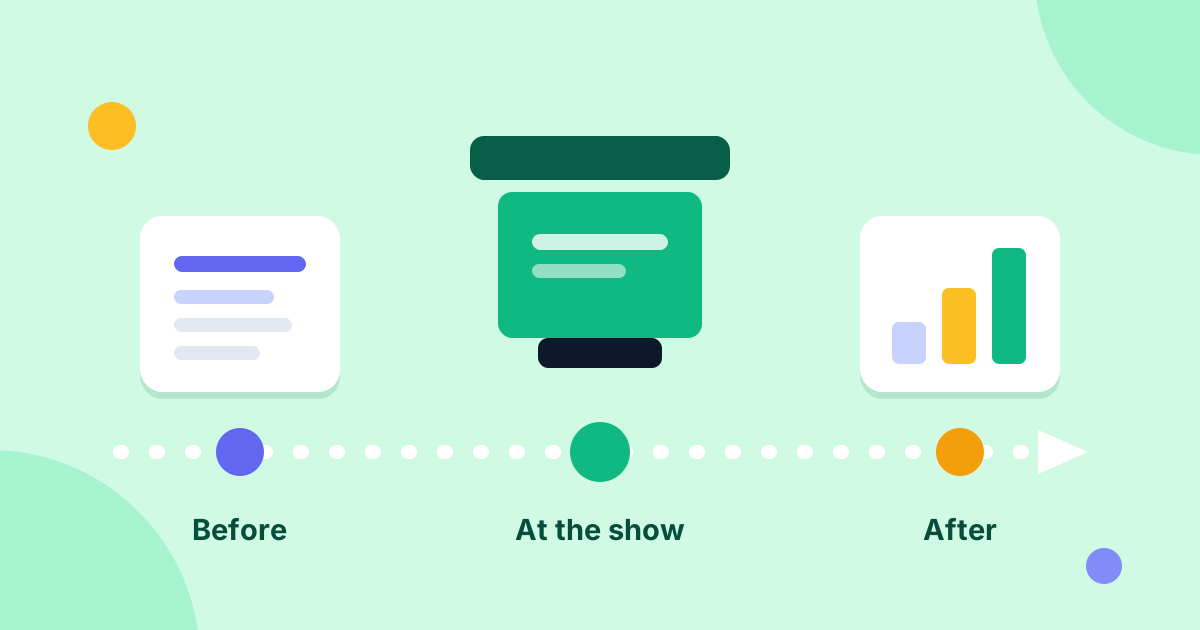
The exhibition itself is now just one touchpoint within a much longer customer journey, one that begins well before the event opens and continues long after the exhibition closes.
Final thoughts
Successful exhibitors no longer rely solely on an impressive booth to deliver results.
They prepare earlier, use better data, prioritise quality over quantity, and follow up with greater consistency.
As exhibitions continue to evolve, businesses that embrace a more strategic and data-driven approach will consistently outperform those relying on traditional methods.
At ExpoLead, we believe every conversation at an exhibition has the potential to become a valuable business opportunity. The key is having the right process to capture, organise, and follow up on those opportunities, long after the exhibition ends.
Stop losing leads after the show ends
ExpoLead OS captures every connection and reminds you when to follow up.
Start free trial